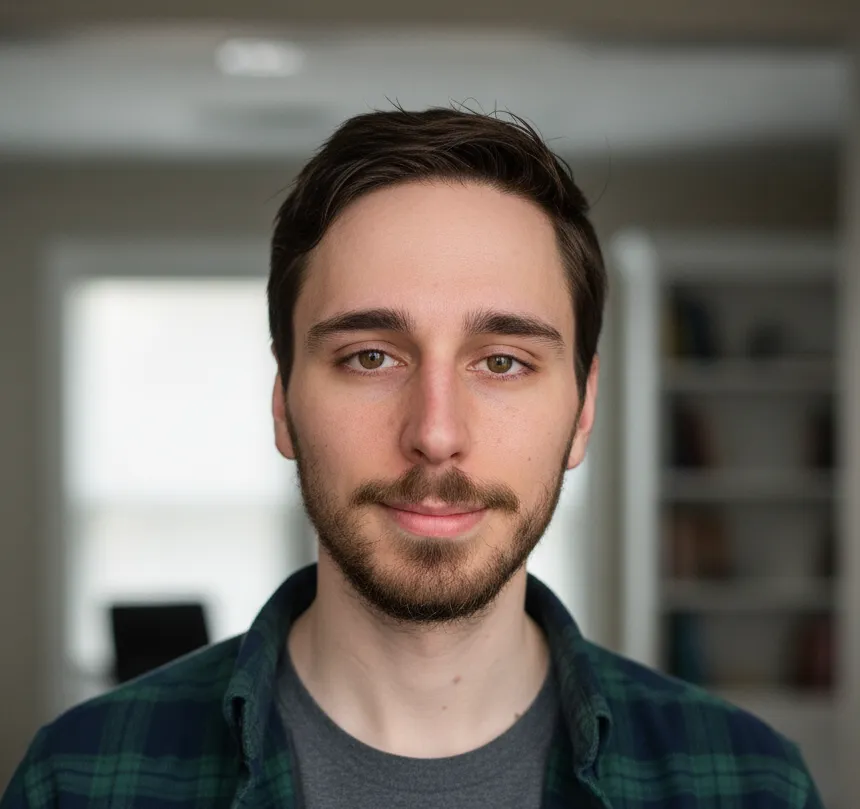
I am Hunter, a Senior AI Research Scientist at Bevaya.ai (formerly Roots Automation), based in Jersey City, NJ. I train large language and vision models at production scale, and my research interests sit at the intersection of foundation models and physical science.

At Bevaya I train VLMs and LLMs full-weight on an 8xH100 node with DeepSpeed ZeRO. I led the training and release of GutenOCR, an open-weights Vision-Language Model family (3B and 7B parameters) with open code (Apache-2.0), downloadable weights (CC-BY-NC), and a 1.5M-page open dataset of biomedical literature. I owned the evaluation end to end: the protocol that separates content accuracy from layout grounding, and the in-domain, held-out, and third-party benchmarking behind it. GutenOCR-7B more than doubled its Qwen2.5-VL backbone’s composite grounded-OCR score (0.40 to 0.82) on 10.5K held-out pages, and GutenOCR-3B set the best region-level character error rate on the Fox benchmark at 0.053, ahead of the dedicated Fox model. I publish at peer-reviewed conferences and workshops including COLING 2025, W-NUT, and AIES.
Before industry, I spent two years at Harvard researching scientific computing for molecular dynamics. I designed generative surrogate models (Transformers, GNNs, VAEs) to accelerate molecular dynamics simulations, built data pipelines for GROMACS and LAMMPS workflows, and developed probabilistic forecasting methods for chaotic physical systems. I passed my qualifying exams and advanced to candidacy, and left with a Master’s to return to applied ML.

At Drexel University I moved into machine learning and computational linguistics, including work at SAP’s Conversational AI Labs and research on the social impacts of generative text.
Entering a new domain has meant learning its science hands-on. At Harvard I taught myself physical chemistry for a catalysis grant. That is where the work heads next: foundation-model training for the sciences, focused on post-training, data, and evaluation. My chemistry preprint shows that how you tokenize SMILES is a modeling decision, not a free default: BPE and Unigram-LM build near-disjoint subword vocabularies over the same chemistry.
Let’s Connect
I am especially keen to talk with teams building foundation-model training for the sciences. Reach me by email or on LinkedIn.