Computational Biology
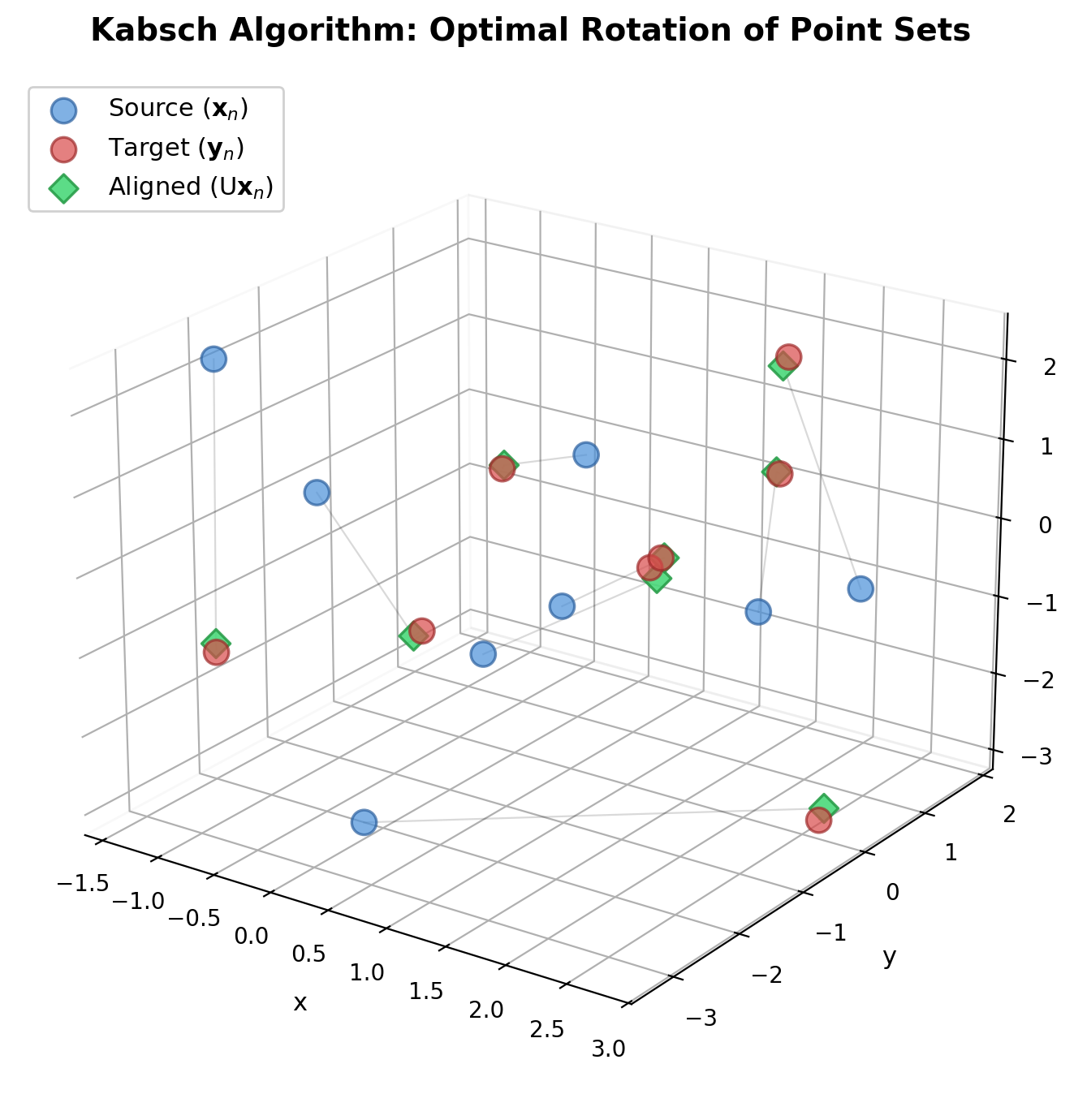
3D scatter plot showing source points, target points, and Kabsch-aligned points overlapping the targets

Kabsch Algorithm: Optimal Rotation for Point Set Alignment

A foundational 1976 short communication presenting a direct, non-iterative method for finding the best rotation matrix between two point sets via eigendecomposition of a cross-covariance matrix.
Computational Biology
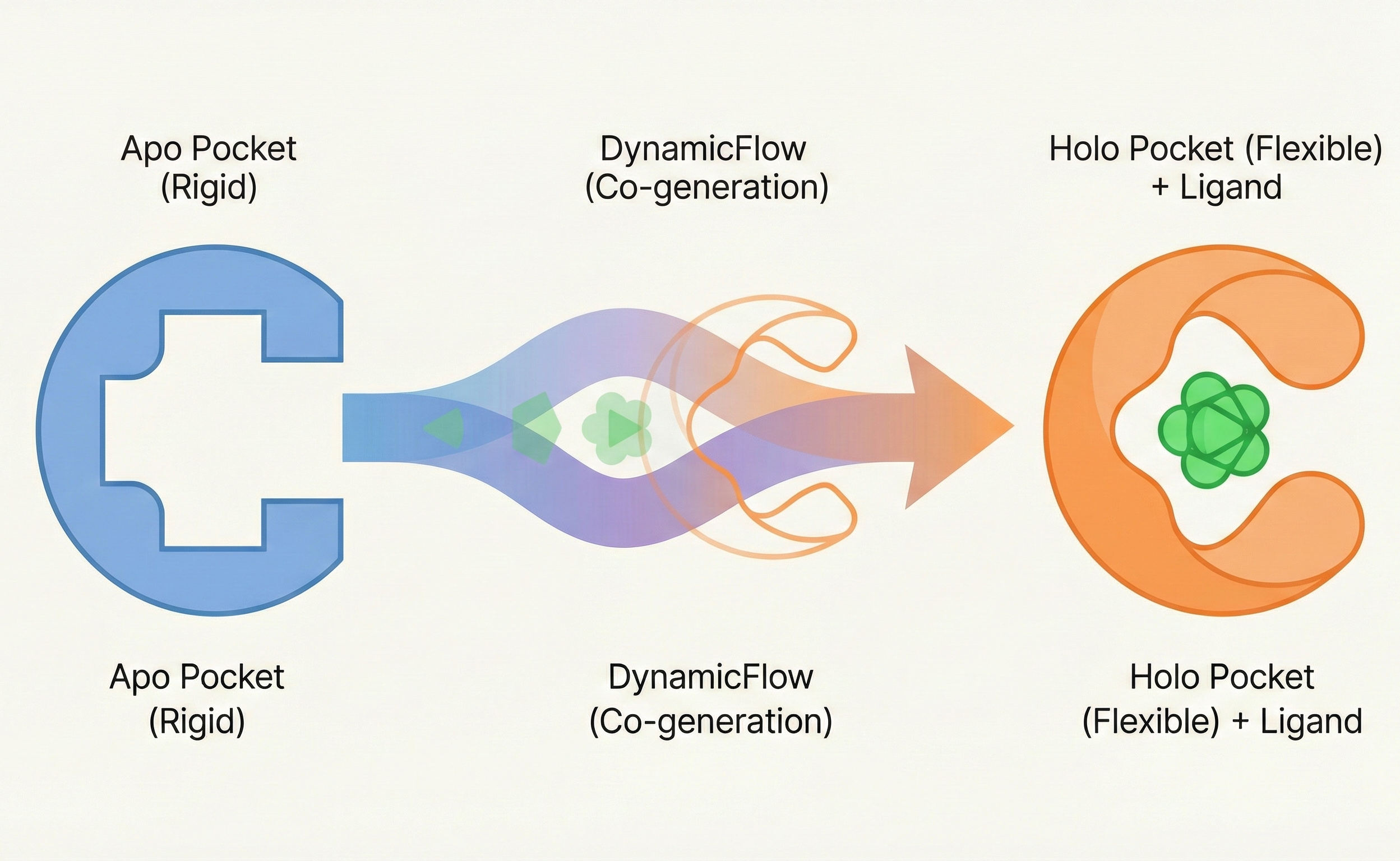
DynamicFlow illustration showing the transformation from apo pocket to holo pocket with ligand molecule generation

DynamicFlow: Integrating Protein Dynamics into Drug Design

This paper introduces DynamicFlow, a full-atom stochastic flow matching model that simultaneously generates ligand molecules and transforms protein pockets from apo to holo states. It also contributes a new dataset of MD-simulated apo-holo pairs derived from MISATO.

Computational Biology
InvMSAFold generates diverse protein sequences from structure using a Potts model

InvMSAFold: Generative Inverse Folding with Potts Models

InvMSAFold replaces autoregressive decoding with a Potts model parameter generator, enabling diverse protein sequence sampling orders of magnitude faster than ESM-IF1.

Computational Biology
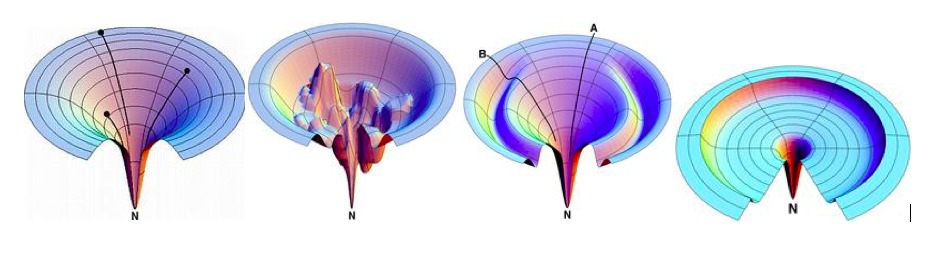
Four types of protein folding energy landscapes from left to right: smooth funnel, rugged funnel with kinetic traps, moat funnel, and champagne glass funnel

Funnels, Pathways, and Energy Landscapes of Protein Folding

This paper resolves Levinthal’s paradox by replacing the single-pathway view with a statistical energy landscape approach. It introduces the concepts of the folding funnel, the glass transition in proteins, and the ‘stability gap’ as a design principle for foldable sequences.

Computational Biology
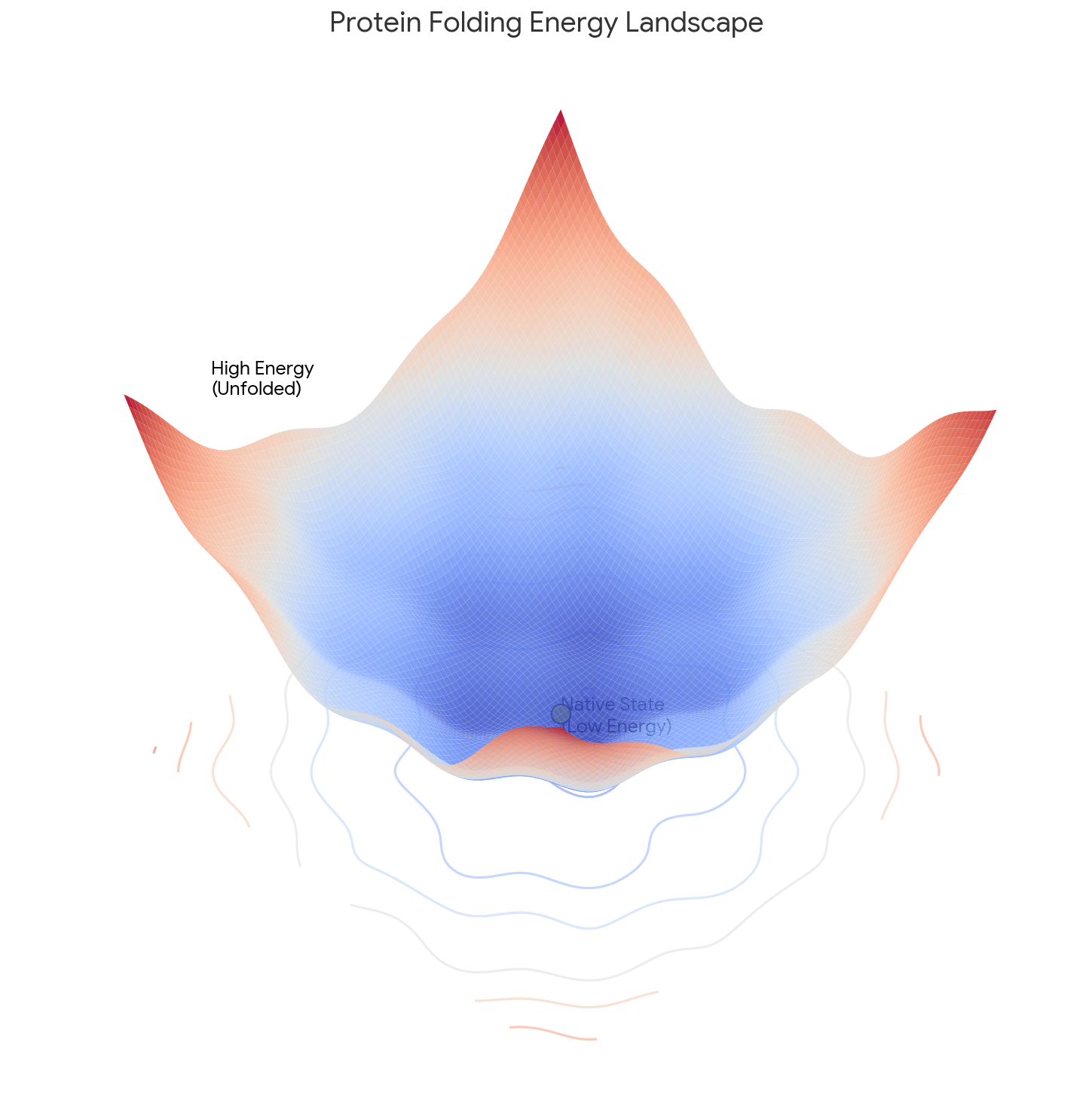
Protein folding energy landscape funnel showing high-energy unfolded states converging to the native state

How to Fold Graciously: Levinthal's Paradox (1969)

Levinthal’s 1969 perspective paper defined the protein folding paradox by demonstrating the impossibility of random search, establishing the need for kinetic pathways that guide folding faster than thermodynamic equilibration allows.

Machine Learning Fundamentals
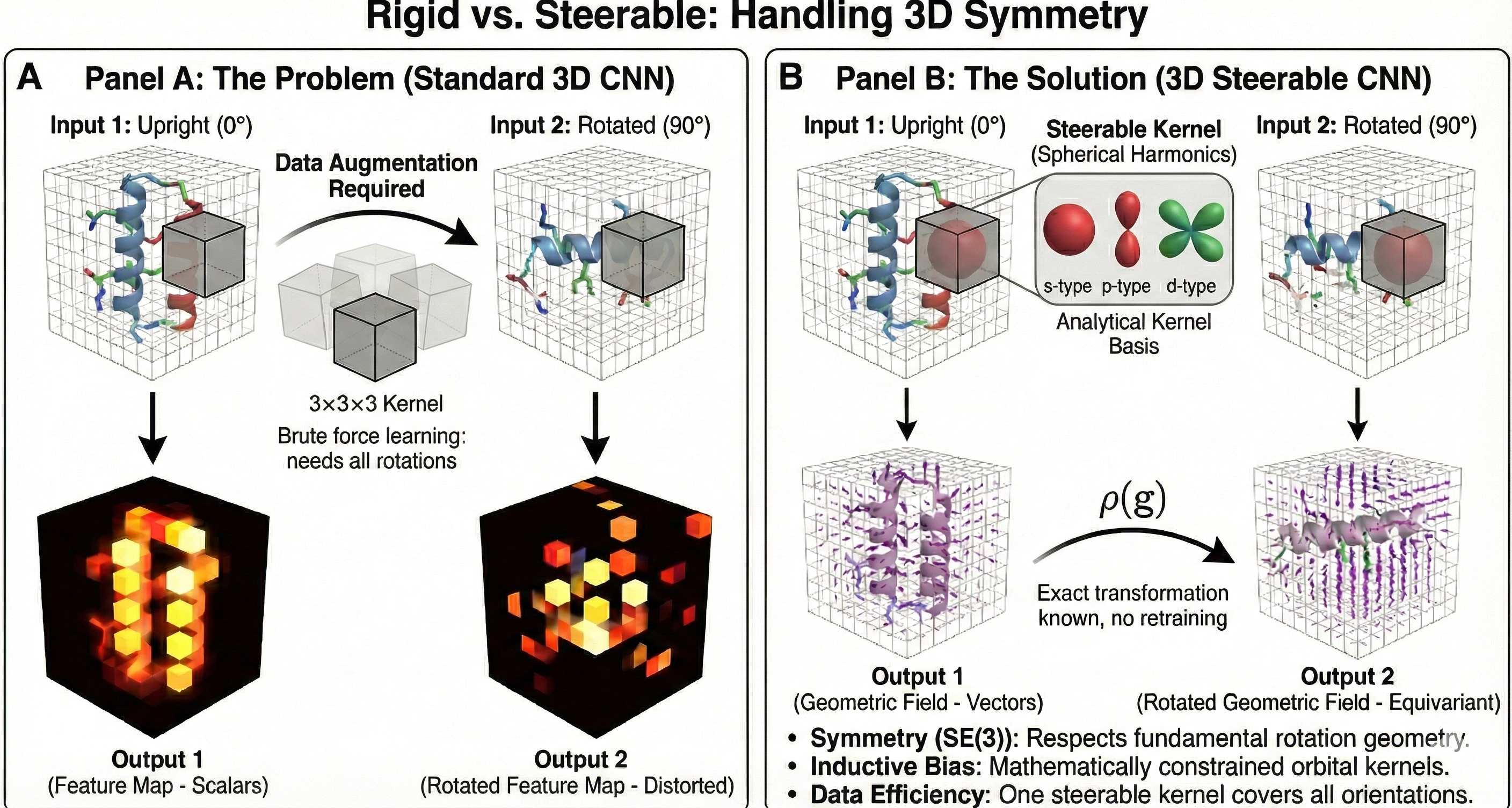
Comparison of standard 3D CNN versus 3D Steerable CNN for handling rotational symmetry

3D Steerable CNNs: Rotationally Equivariant Features

Weiler et al.’s NeurIPS 2018 paper introducing 3D Steerable CNNs that achieve SE(3) equivariance through group representation theory and spherical harmonic convolution kernels, eliminating the need for rotational data augmentation and improving data efficiency for scientific applications with rotational symmetry like molecular and protein structures.

Evolutionary Biology
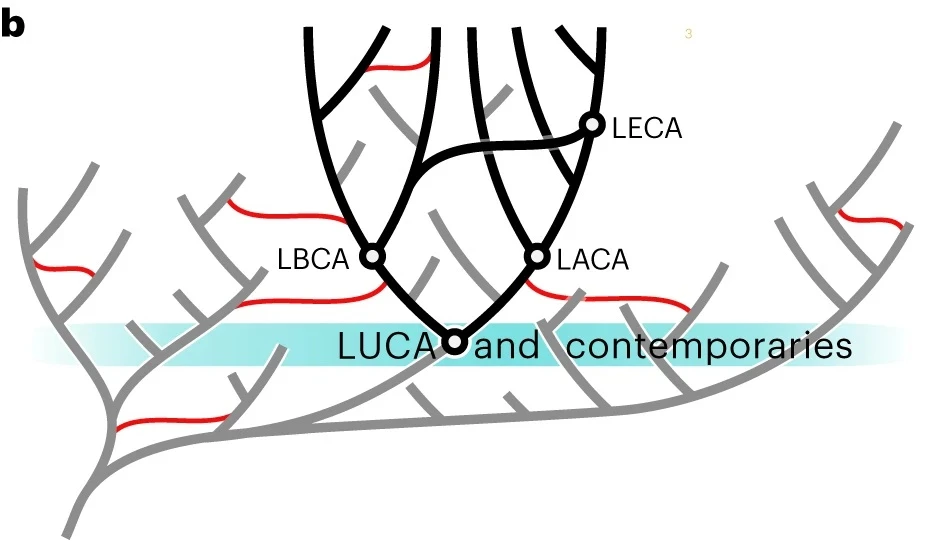
A reconstruction of LUCA within its evolutionary and ecological context

The Nature of LUCA and Its Impact on the Early Earth System

A comprehensive phylogenomic study dating LUCA to ~4.2 Ga and reconstructing it as a complex, anaerobic acetogen. The authors apply the cross-bracing molecular clock method alongside gene-tree-species-tree reconciliation to infer that LUCA possessed an early immune system and lived within a hydrogen-recycling ecosystem.