Time Series Forecasting
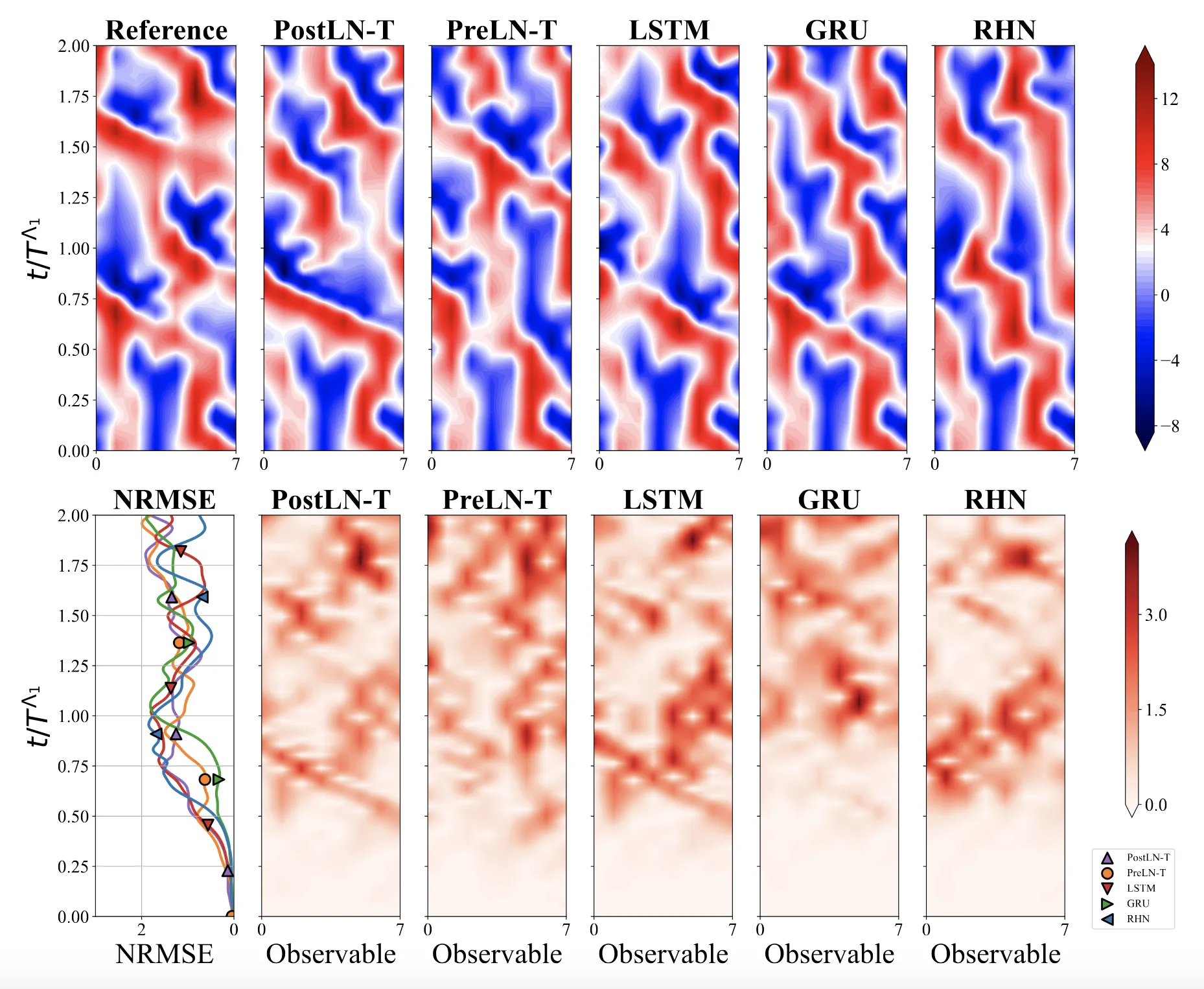
Forecasting comparison of different neural architectures on the Multiscale Lorenz-96 system

Optimizing Sequence Models for Dynamical Systems

We systematically ablate core mechanisms of Transformers and RNNs, finding that attention-augmented Recurrent Highway Networks outperform standard Transformers on forecasting high-dimensional chaotic systems.
Computational Chemistry
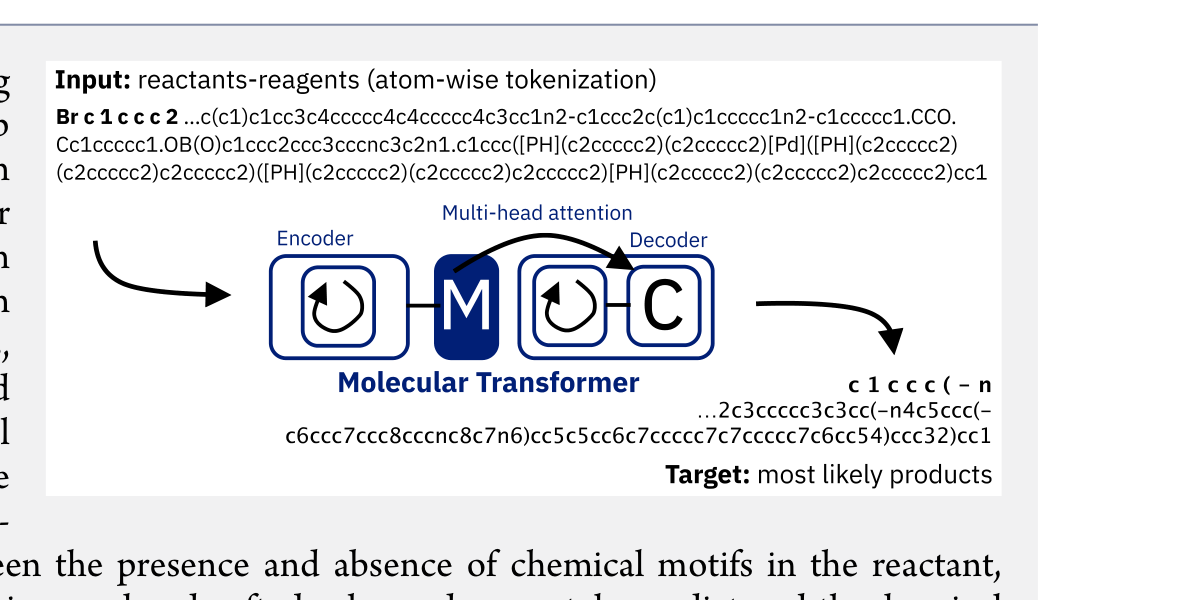
Molecular Transformer architecture showing atom-wise tokenized SMILES input through encoder-decoder with multi-head attention to predict reaction products

Molecular Transformer: Calibrated Reaction Prediction

The Molecular Transformer applies the Transformer architecture to forward reaction prediction, treating it as SMILES-to-SMILES machine translation. It achieves 90.4% top-1 accuracy on USPTO_MIT, outperforms quantum-chemistry baselines on regioselectivity, and provides calibrated uncertainty scores (0.89 AUC-ROC) for ranking synthesis pathways.

Computational Chemistry
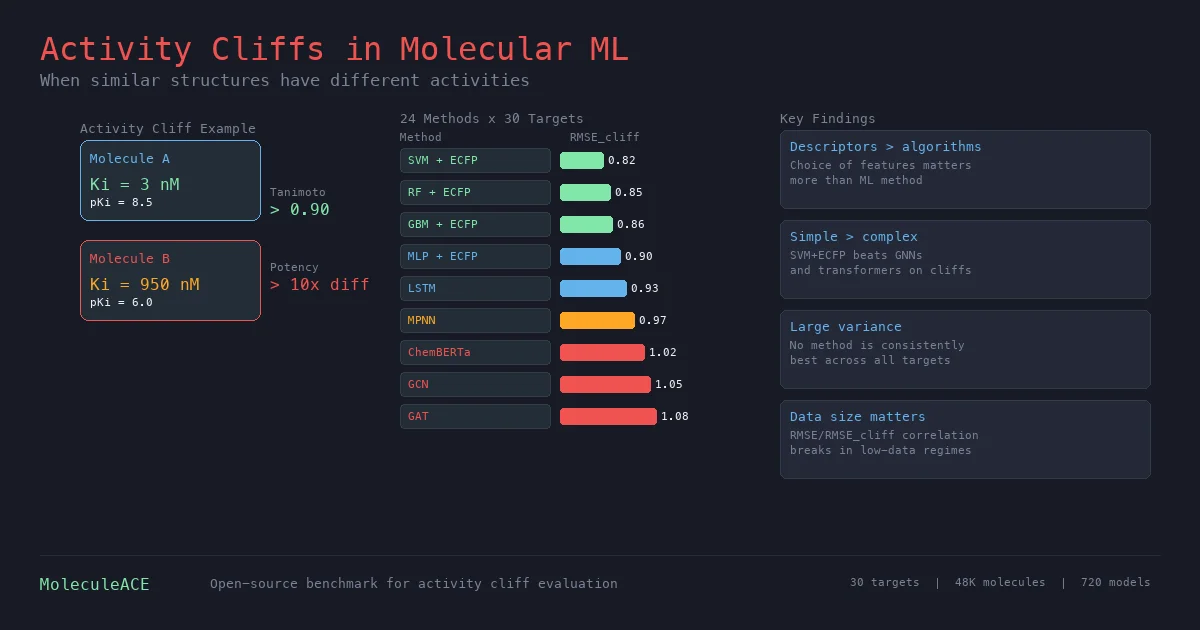
Activity cliffs benchmark showing method rankings by RMSE on cliff compounds, with SVM plus ECFP outperforming deep learning approaches

Exposing Limitations of Molecular ML with Activity Cliffs

This paper benchmarks 24 machine and deep learning methods on activity cliff compounds (structurally similar molecules with large potency differences) across 30 macromolecular targets. Traditional ML with molecular fingerprints consistently outperforms graph neural networks and SMILES-based transformers on these challenging cases, especially in low-data regimes.

Computational Chemistry
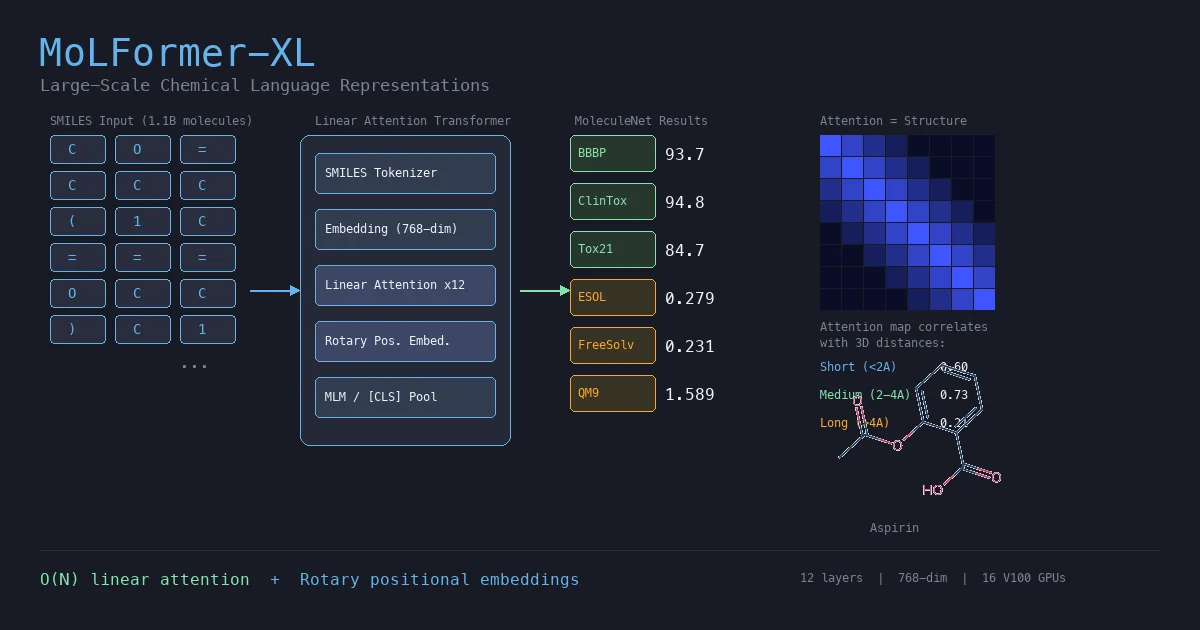
MoLFormer-XL architecture diagram showing SMILES tokens flowing through a linear attention transformer to MoleculeNet benchmark results and attention-structure correlation

MoLFormer: Large-Scale Chemical Language Representations

MoLFormer is a transformer encoder with linear attention and rotary positional embeddings, pretrained via masked language modeling on 1.1 billion molecules from PubChem and ZINC. MoLFormer-XL outperforms GNN baselines on most MoleculeNet classification and regression tasks, and attention analysis reveals that the model learns interatomic spatial relationships directly from SMILES strings.

Computational Chemistry
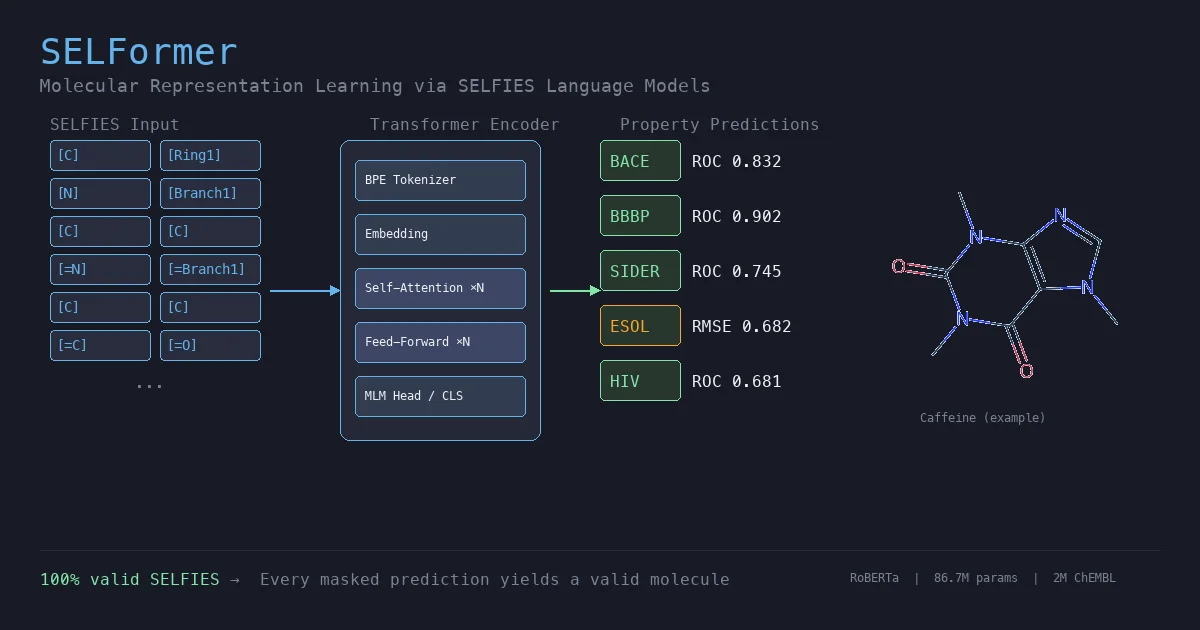
SELFormer architecture diagram showing SELFIES token input flowing through a RoBERTa transformer encoder to molecular property predictions

SELFormer: A SELFIES-Based Molecular Language Model

SELFormer is a transformer-based chemical language model that uses SELFIES instead of SMILES as input. Pretrained on 2M ChEMBL compounds via masked language modeling, it achieves strong classification performance on MoleculeNet tasks, outperforming ChemBERTa-2 by ~12% on average across BACE, BBBP, and HIV.

Computational Chemistry
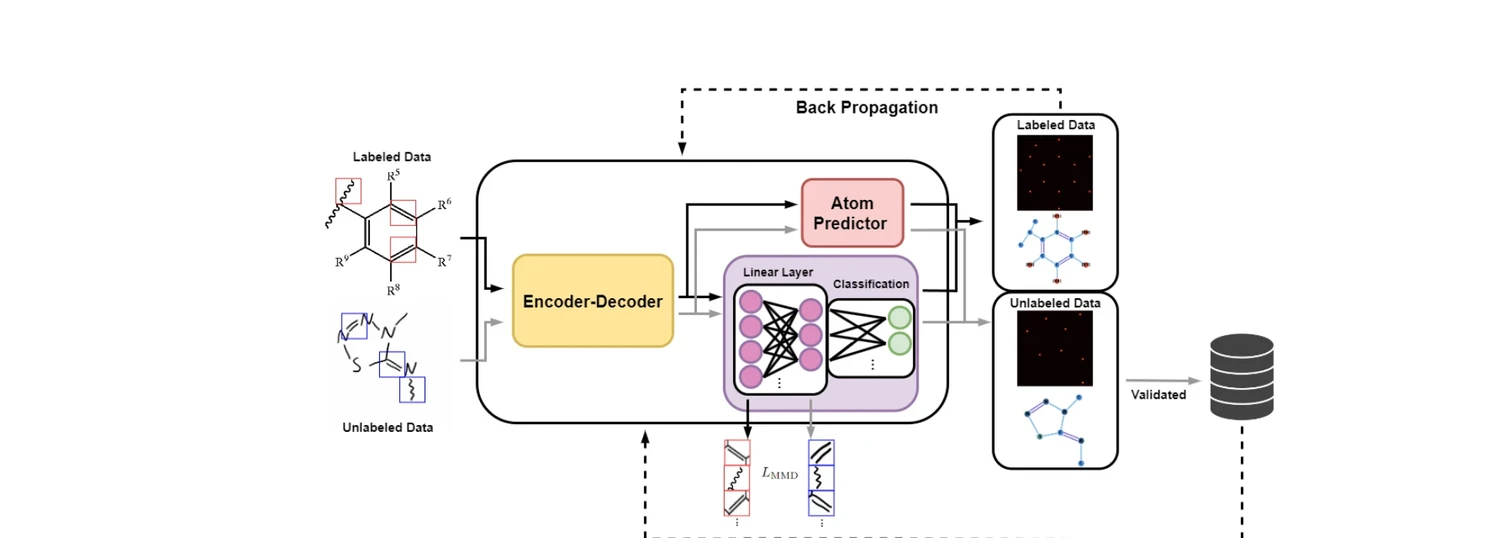
AdaptMol domain adaptation pipeline showing encoder-decoder with MMD alignment between labeled source and unlabeled target domain images

AdaptMol: Domain Adaptation for Molecular OCSR (2026)

AdaptMol combines an end-to-end graph reconstruction model with unsupervised domain adaptation via class-conditional MMD on bond features and SMILES-validated self-training. Achieves 82.6% accuracy on hand-drawn molecules (10.7 points above prior best) while maintaining state-of-the-art results on four literature benchmarks, using only 4,080 real hand-drawn images for adaptation.

Generative Modeling
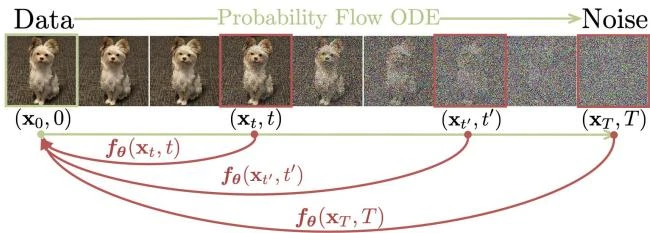
Diagram showing consistency models mapping points on a PF ODE trajectory to the same origin

Consistency Models: Fast One-Step Diffusion Generation

This paper introduces consistency models, a new family of generative models that map any point on a Probability Flow ODE trajectory to its origin. They support fast one-step generation by design, while allowing multi-step sampling for improved quality and zero-shot editing tasks like inpainting and colorization.

Generative Modeling
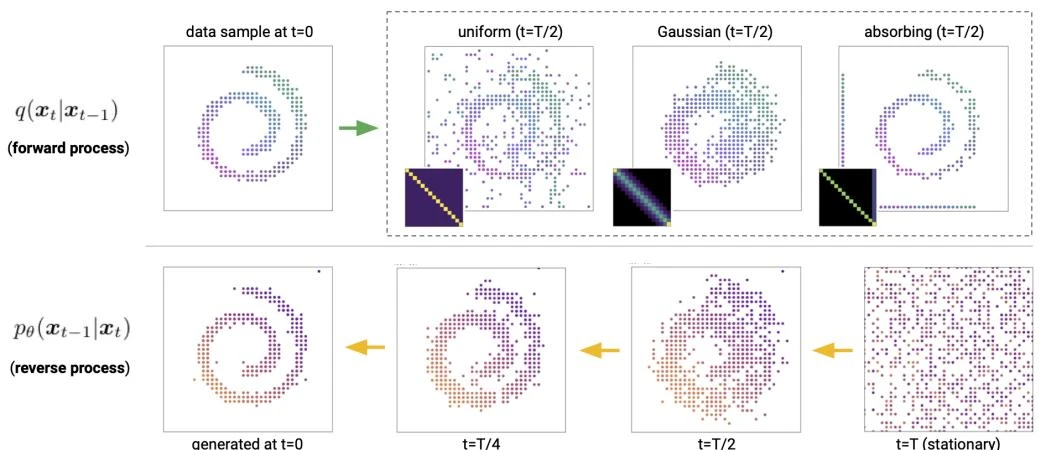
D3PM forward and reverse processes on a quantized swiss roll with uniform, Gaussian, and absorbing transition matrices

D3PM: Discrete Denoising Diffusion Probabilistic Models

This paper introduces Discrete Denoising Diffusion Probabilistic Models (D3PMs), which generalize diffusion to discrete state-spaces using structured Markov transition matrices. D3PMs include uniform, absorbing-state, and discretized Gaussian corruption processes, drawing a connection between diffusion and masked language models.

Computational Chemistry
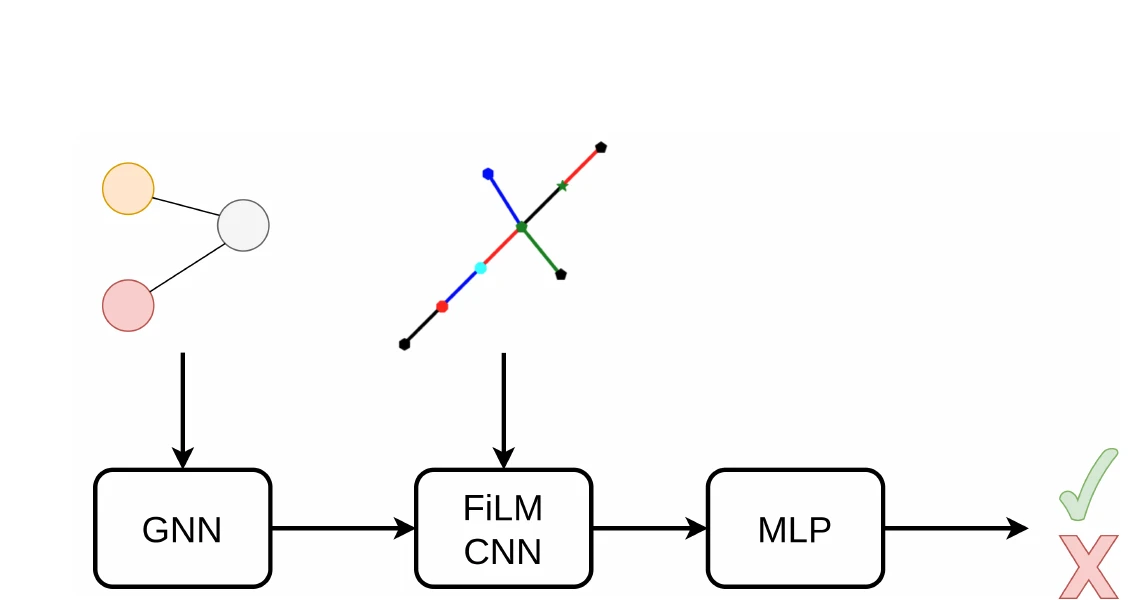
GraSP feed-forward architecture showing GNN, FiLM-conditioned CNN, and MLP classification head

GraSP: Graph Recognition via Subgraph Prediction (2026)

GraSP introduces a general framework for recognizing graphs in images by framing it as sequential subgraph prediction with a binary classifier. A GNN conditions a CNN via FiLM layers to predict whether a candidate graph is a subgraph of the target. Applied to OCSR on QM9, GraSP achieves 67.5% accuracy with no domain-specific modifications.

Generative Modeling
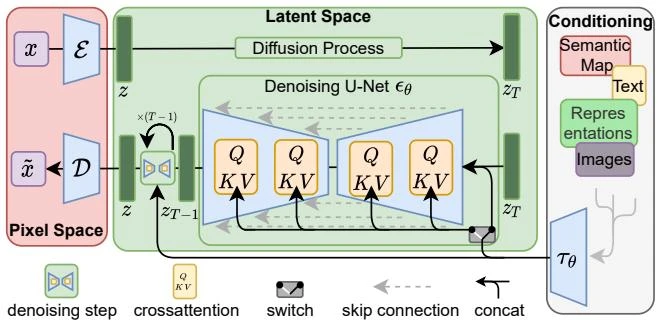
LDM architecture diagram showing conditioning via concatenation and cross-attention

Latent Diffusion Models for High-Res Image Synthesis

This paper introduces Latent Diffusion Models (LDMs), which apply denoising diffusion in the latent space of pretrained autoencoders. By separating perceptual compression from generative learning and adding cross-attention conditioning, LDMs achieve FID 1.50 on Places inpainting and FID 3.60 on ImageNet class-conditional synthesis, with competitive text-to-image generation, at a fraction of the compute cost of pixel-space diffusion.

Machine Learning Fundamentals
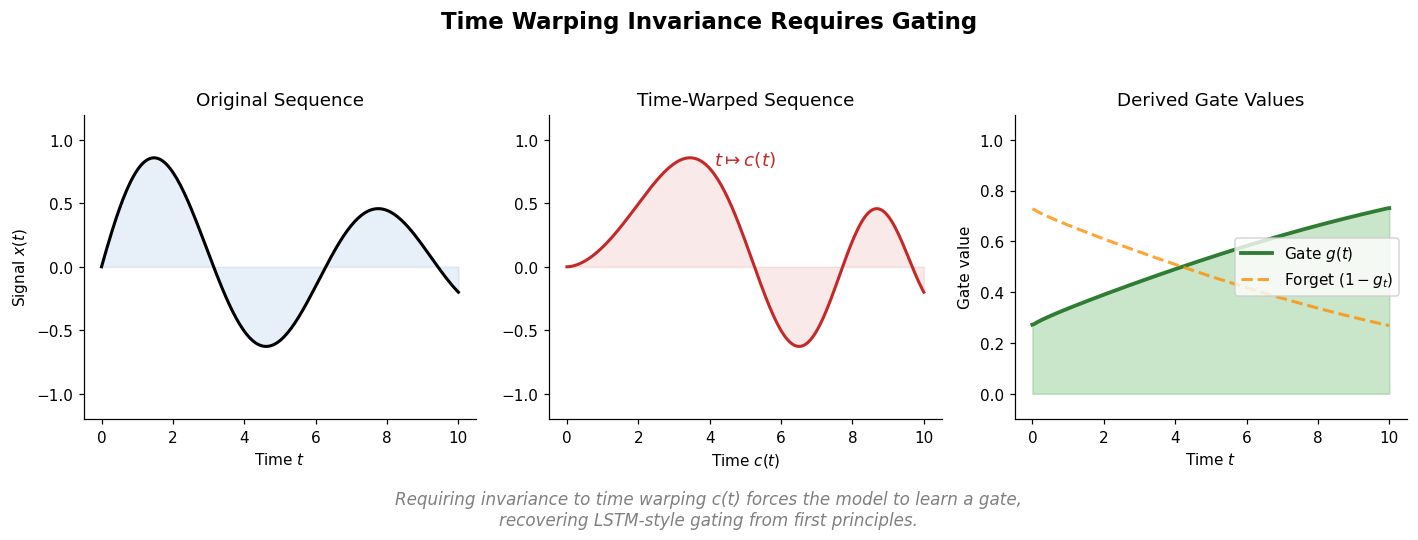
Three-panel diagram showing an original sequence, its time-warped version, and the gate values derived from requiring time warping invariance

Can Recurrent Neural Networks Warp Time? (ICLR 2018)

Tallec and Ollivier show that requiring invariance to time transformations in recurrent models leads to gating mechanisms, recovering key LSTM components from first principles. They propose the chrono initialization for gate biases that improves learning of long-term dependencies.

Machine Learning Fundamentals
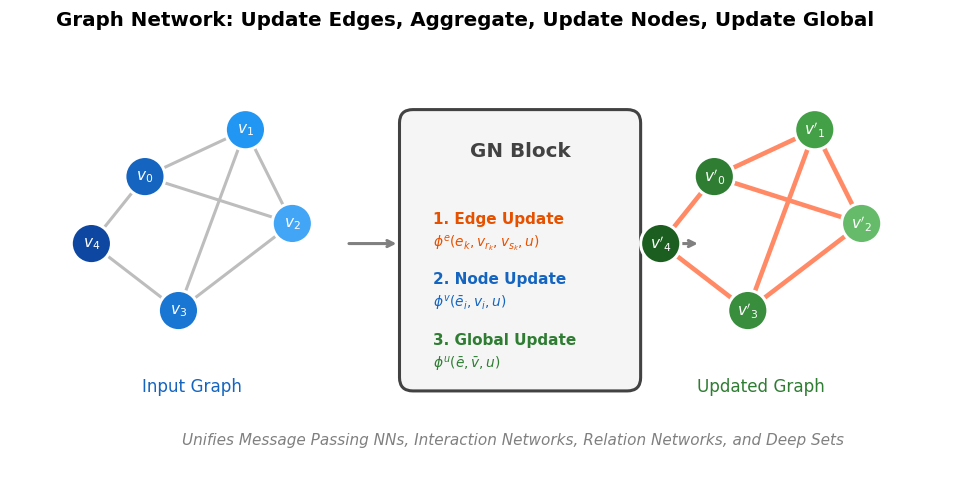
Graph network block diagram showing input graph transformed through edge, node, and global update steps to produce an updated graph

Relational Inductive Biases in Deep Learning (2018)

Battaglia et al. argue that combinatorial generalization requires structured representations, systematically analyze the relational inductive biases in standard deep learning architectures (MLPs, CNNs, RNNs), and present the graph network as a unifying framework that generalizes and extends prior graph neural network approaches.